
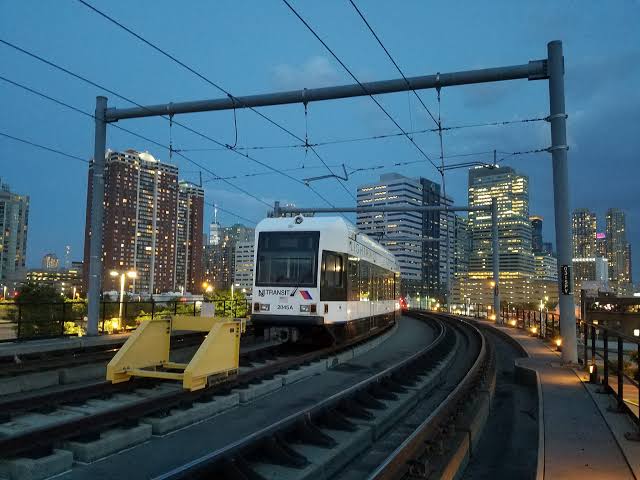

NJ Transit’s Board of Directors recently authorized $65.6 million for capital improvements on the Hudson-Bergen Light Rail system. This is the first allocation of a planned $250 million investment that will be spread out over the course of five years. The funds will help support elevator upgrades at the 8th Street, 9th Street and Bergenline Avenue stations, overhauling light rail vehicles and right-of-way improvements, among other issues that are being addressed to improve the commuting experience.
“New Jerseyans deserve public transit they can count on to get to work, make it to class, and get home to their families,” said Governor Mikie Sherrill. “This investment will tackle the everyday frustrations riders face, from elevators that need repairs to vehicles that need an overhaul. We’re putting our transportation dollars to work to make the Hudson-Bergen Light Rail safer, more accessible, and more reliable for the nearly fifty-thousand people who depend on it every day.”
The Hudson-Bergen Light Rail consists of 24 stations that stretch 20.6 miles along the Hudson River waterfront in Hudson County. This includes 52 light rail vehicles that service roughly 48,000 customers daily. The system has been operating since Sept. 13, 2025, under an operations and maintenance contract with ACI-Herzog to provide operations, maintenance and a capital asset replacement program.
“The Hudson-Bergen Light Rail serves 48,000 customers a day, and we plan to invest $250 million over the next five years to improve reliability across the system,” said NJ TRANSIT President & CEO Kris Kolluri. “This initial round of capital investment will fund elevator modernization at three priority stations, vehicle overhauls, upgrades to the Weehawken and Bergenline tunnels, and improvements to passenger safety, so our customers can look forward to a smoother, more reliable ride for years to come.”
The capital improvements are separate from the 15-year, $1.6 billion contract with ACI-Herzog Joint Venture of Boston, Massachusetts. The Federal Transit Administration, Transportation Trust Fund and the NJ Transit Light Rail Operating Budget are the expected sources for the capital improvement projects. These improvements will include elevator and safety upgrades, as well as technology and communications upgrades and a passenger safety initiative.